 -by
-by Introduction: The Shift from Education to Employability
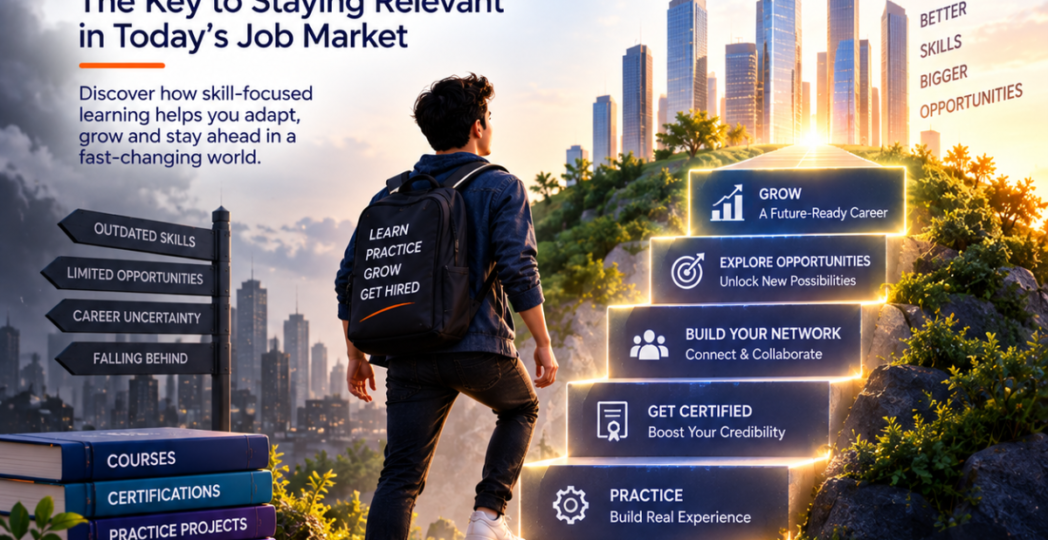
The global job market is evolving faster than ever. Automation, artificial intelligence, cloud computing, and data-driven decision-making are redefining how businesses operate—and what they expect from talent. In this rapidly changing environment, traditional education alone is no longer enough.
Degrees still matter, but employers increasingly prioritize job-ready skills, practical experience, and continuous upskilling. This shift has made career-focused learning not just valuable, but essential for professionals who want to stay relevant, competitive, and employable.
Career-focused learning bridges the gap between education and employment by aligning learning directly with industry needs, real-world roles, and measurable outcomes.
What Is Career-Focused Learning?
Career-focused learning is an approach to education that emphasizes:
- Industry-relevant skills
- Hands-on, practical training
- Role-based learning paths
- Outcome-driven education
- Continuous upskilling
Unlike traditional academic models that emphasize theory, career-focused learning prepares learners to perform from day one in real job roles.
This model is increasingly adopted by:
- Working professionals
- Fresh graduates
- Enterprises and corporate L&D teams
- Career switchers and upskillers
Why Traditional Learning Models Are Falling Short
While academic degrees provide foundational knowledge, they often struggle to keep pace with market realities.
Key Limitations of Traditional Education:
- Static curricula that lag behind industry changes
- Limited exposure to real-world tools and use cases
- Lack of role-specific or domain-specific focus
- Minimal alignment with employer expectations
As a result, many graduates face the paradox of being qualified but not employable.
The Modern Job Market Demands Skills, Not Just Credentials
Today’s employers are asking a different question:
“Can you do the job?” — not just “What degree do you have?”
What Employers Look for Today:
- Practical experience with tools and technologies
- Problem-solving and critical thinking skills
- Digital fluency and adaptability
- Industry-recognized certifications
- Ability to learn continuously
According to global hiring trends, skills-based hiring is replacing credential-based hiring across industries such as IT, data, cloud, finance, marketing, and operations.
Key Benefits of Career-Focused Learning
1. Improves Employability and Job Readiness
Career-focused learning equips learners with hands-on skills that are directly applicable to real roles—reducing the gap between training and employment.
2. Aligns Learning with Industry Needs
Courses are designed around current job roles, tools, and workflows, ensuring relevance in fast-evolving industries.
3. Enables Faster Career Growth
Professionals who upskill strategically can:
- Move into higher-paying roles
- Transition into new domains
- Stay competitive in their current roles
4. Supports Continuous Upskilling
Career-focused learning promotes lifelong learning—critical in an era where skills can become outdated in just a few years.
5. Delivers Measurable ROI for Learners and Organizations
For individuals, it leads to better jobs and career mobility.
For enterprises, it results in higher productivity, reduced skill gaps, and future-ready teams.
Career-Focused Learning and the Rise of Skill-Based Economies
The global economy is shifting toward a skill-based workforce, where learning is continuous and careers are non-linear.
Emerging Trends Driving This Shift:
- Digital transformation across industries
- Remote and hybrid work models
- Rapid adoption of AI and automation
- Demand for cross-functional and hybrid skills
Career-focused learning platforms help professionals stay aligned with these trends by offering flexible, modular, and role-specific learning paths.
Why Career-Focused Learning Is Critical for Enterprises
Organizations today face a major challenge: skill gaps.
Enterprise Benefits Include:
- Faster onboarding and reduced training time
- Workforce alignment with business goals
- Scalable upskilling and reskilling programs
- Improved employee retention and engagement
As a result, many organizations are investing in enterprise learning platforms that prioritize skills over theory.
How Career-Focused Learning Prepares You for the Future
The future of work will reward those who can:
- Learn quickly
- Adapt continuously
- Apply knowledge practically
Career-focused learning ensures you are not just learning for today—but preparing for tomorrow’s roles, technologies, and opportunities.
Choosing the Right Career-Focused Learning Platform
When selecting a learning platform, look for:
- Industry-designed curricula
- Hands-on projects and real-world use cases
- Clear learning paths aligned to job roles
- Certification and skill validation
- Enterprise-grade quality and scalability
Platforms like SkillElevator are designed specifically to meet these criteria—helping learners and organizations build future-ready skills.
Conclusion: Skills Are the New Career Currency
In today’s competitive job market, career-focused learning is no longer optional—it is essential.
Professionals who invest in relevant skills gain:
- Greater employability
- Faster career progression
- Long-term career resilience
Organizations that adopt career-focused learning build:
- Agile, skilled, and future-ready teams
The future belongs to those who learn with purpose.